


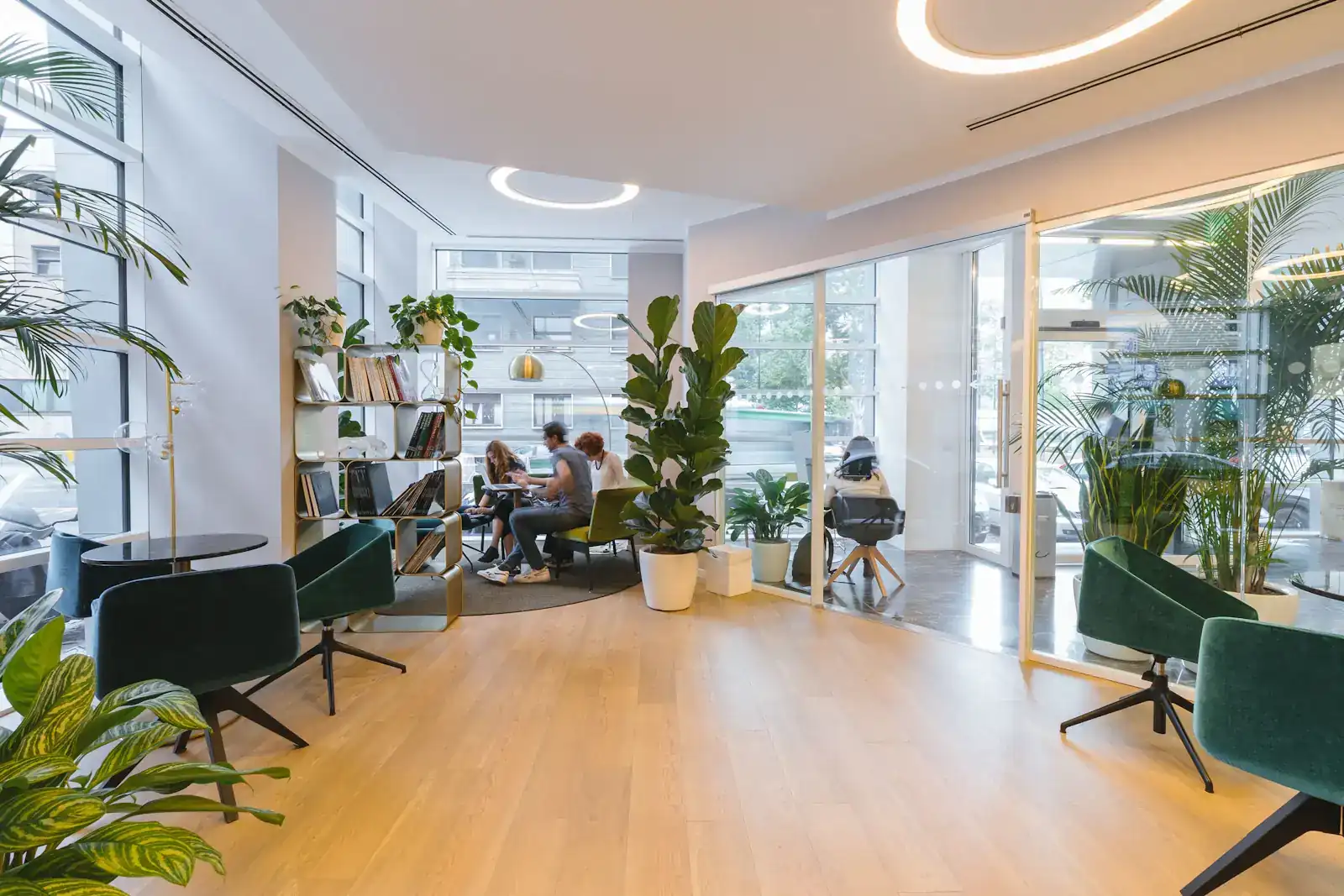
Private serviced offices and shared co-working memberships are fundamentally different products. Choosing the wrong one can mean paying for space you don't use — or outgrowing your setup within six months. Here's how to think through the decision for a Hong Kong-based team.
The Core Difference
The fundamental distinction is privacy and commitment. A serviced office gives your team a private, lockable room — your space, your environment, your rules. A co-working membership gives access to shared infrastructure: open desks, quiet zones, and communal areas used by dozens of other companies simultaneously.
Both are legitimate options. The right choice depends on your team size, work style, budget, client interaction frequency, and how quickly you expect to grow.
Serviced Offices Explained
Serviced offices in Hong Kong are fully fitted, furnished, and managed private spaces offered on monthly rolling or fixed-term licences (3–24 months). The monthly rate bundles everything: furniture, internet, utilities, reception, meeting room credits, cleaning, and building amenities.
The major advantage of serviced offices is control: your team works in a closed environment with consistent noise levels, the ability to display branding, and the privacy to handle confidential calls or client meetings without leaving the building. The trade-off is cost — you pay for your space whether desks are occupied or not.
Co-working Memberships Explained
Co-working in Hong Kong operates on a tiered membership model. Hot desk memberships grant access to any available seat in the open-plan area. Dedicated desk memberships reserve a specific seat that's yours each day. Private studios sit between co-working and serviced offices — semi-enclosed spaces for 2–10 people at lower cost than a full private suite.
Co-working is significantly cheaper per desk than a private serviced office for the same district. The trade-off is the shared environment: ambient noise, visual distraction, limited privacy for calls, and no ability to customise the space. For individual contributors or small teams doing heads-down work, this rarely becomes a problem. For teams doing constant client calls or handling sensitive data, it usually does.
Comparing the Costs
Serviced office vs co-working — key dimensions compared
| Dimension | Serviced Office | Co-working |
|---|---|---|
| Cost per desk / mo | HK$4,800–11,000 | HK$1,800–5,500 |
| Privacy | Full — lockable suite | None to partial |
| Minimum commitment | 1 month | 1 month (some daily) |
| Flexibility to scale | Moderate (contract terms) | High (add seats easily) |
| Client meeting suitability | High | Moderate (meeting rooms extra) |
| Branding / signage | Yes | Rarely |
| Best for team size | 2–80 people | 1–15 people |
How to Decide
- 01
Count your actual headcount
A serviced office starts to become cost-competitive with co-working at around 4–6 desks. Below that, co-working (dedicated desks or a private studio) usually wins on cost. Above 8–10 people, a private serviced office almost always makes more financial sense.
- 02
Consider your client interaction model
If you're regularly hosting clients — for meetings, pitches, or sensitive consultations — a private serviced office with in-house meeting rooms is significantly more professional and convenient. Co-working meeting room credits rarely cover heavy usage.
- 03
Assess your growth rate
If your team is likely to double in 6 months, a co-working studio or hot desk arrangement preserves maximum flexibility. If you're stable and established, a 12-month serviced office licence often delivers better terms and a better environment.
- 04
Factor in the noise
Be honest about your team's work style. Creative and technical roles that require deep focus often struggle in open co-working environments. Client services, operations, or account management roles tend to adapt more easily.
Advisor note
“We've seen teams save HK$200,000+ per year by moving from an over-roomed serviced office to a co-working studio at the right moment — and others lose productivity worth multiples of that by staying in a co-working environment too long. The answer is always specific to the team.”
Key Takeaways
- Serviced offices provide privacy and control; co-working provides flexibility and lower cost per desk.
- Co-working is typically more cost-effective below 4–6 desks; serviced offices win above 8–10.
- If you're hosting clients regularly or handling confidential work, lean toward a serviced office.
- Fast-growing teams should prioritise flexibility — co-working studios offer the easiest path to scaling.
- The 'right' answer is team-specific — most decisions benefit from an independent view before committing.
Ready to compare actual options?
Live availability and operator-specific pricing live on the workspace-type pages — private offices for enclosed team rooms, dedicated desks for coworking.